



Detailed Explanation of the Lithium-Battery System in AGV Automatic Guide Carrier Vehicles
With the continuous progress of automation technology, the application of AGV (automatic guide carrier vehicle) in logistics and manufacturing industry has become more and more extensive. With its automation, efficiency and flexibility, AGV has become an indispensable means of transportation in modern factories and warehouses. In the core technology of AGV, lithium battery system, as its power source, plays a vital role. This article will deeply discuss the composition of the lithium battery system of AGV automatic guide carrier vehicle and the functions of each part.
I. Overview of lithium battery system
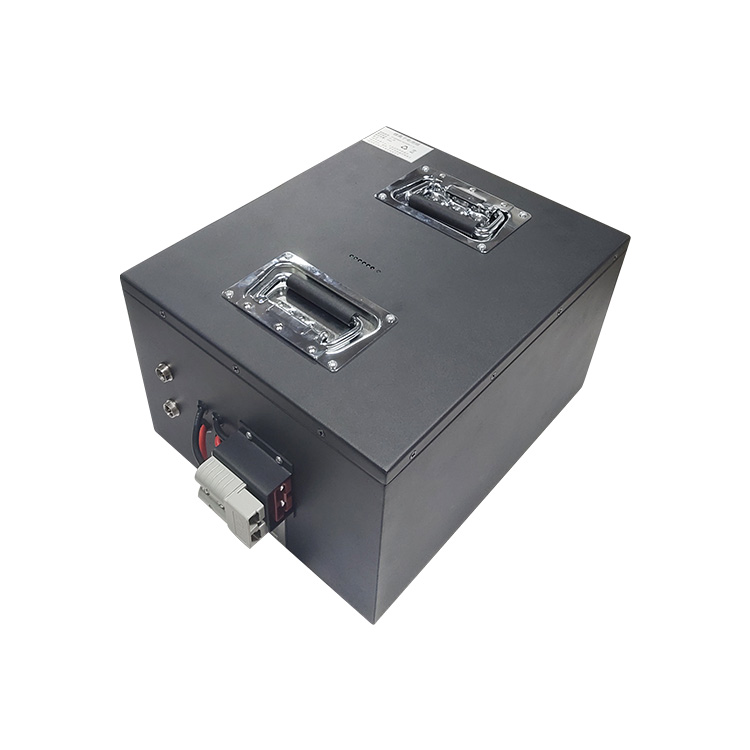
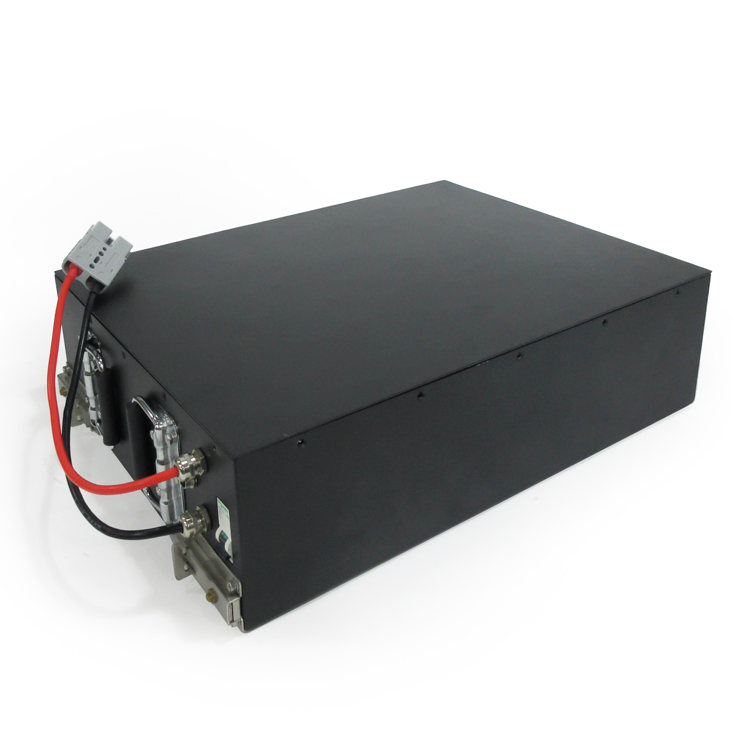
the lithium battery system of AGV automatic guide carrier vehicle is mainly composed of battery unit, management system, charging equipment and supporting safety protection device. The design of the whole system should not only ensure the efficient operation of AGVs in various working environments, but also ensure the safety and reliability.
II. Lithium battery unit
1. Battery type
AGV usually uses lithium iron phosphate (LiFePO4) or ternary lithium battery (such as nickel cobalt manganese acid NCM) as the battery unit. Lithium iron phosphate battery is widely used because of its high safety and long service life, while ternary lithium battery is suitable for scenarios with high endurance requirements due to its higher energy density.
2. Battery capacityBattery capacity is an important parameter that affects the battery life of AGV. Generally speaking, the capacity of lithium battery of AGV can vary from tens of ampere hours (Ah) to hundreds of ampere hours, depending on the load, working time and speed requirements of the transport vehicle. Reasonable capacity selection can ensure the stability and efficiency of AGVs in long-term operation.
3. Battery module
the lithium battery unit usually consists of multiple battery modules. Each module contains multiple battery cells, which are combined in series and parallel to meet the requirements of different voltages and capacities. Modular design facilitates maintenance and replacement, reducing operating costs.
3. Battery management system (BMS)
battery Management System (BMS) is an indispensable component of lithium battery system. Its main functions include:
1. Monitoring and protection
BMS monitors the voltage, current, temperature and other parameters of the battery in real time to ensure the operation of each battery unit within a safe range. If abnormal conditions (such as overcharge, overdischarge, short circuit, etc.) are found, BMS will immediately take protective measures to prevent battery damage or safety accidents.
2. Charging Control
BMS is responsible for controlling the charging process of lithium batteries to ensure the efficiency and safety of the charging process. Through intelligent algorithms, BMS can adjust the charging strategy according to the battery status and optimize the charging time and efficiency.
3. State estimation
BMS is also responsible for estimating the battery status, such as the remaining power (SOC) and health status (SOH). Through this information, AGVs can intelligently plan the running time and charging cycle to improve work efficiency.
IV. Charging equipment
the lithium battery system of AGV needs to be equipped with efficient and reliable charging equipment to support the fast charging of the battery. The main components of charging equipment include:
1. Charger
charger is a device that converts alternating current into direct current suitable for lithium battery charging. Modern chargers usually have intelligent charging function, which can automatically adjust the charging current and voltage according to the state of the battery to ensure safe and efficient charging process.
2. Charging pile
in some large warehouses or factories, AGVs may need to be charged at specific locations. Charging piles provide charging interface for AGVs and are usually equipped with automatic docking function. AGVs can automatically find charging piles during charging to reduce manual intervention.
3. Fast charging technology
in order to improve the working efficiency of AGVs, fast charging technology has gradually become a trend. Through high-power charger and optimized charging algorithm, the lithium battery of AGV can be filled in a short time, providing continuous power support for AGV.
V. Safety protection device
the safety of lithium battery system is the top priority in the design of AGV. Therefore, the lithium battery system of AGV is usually equipped with various safety protection devices:
1. Overcharge/overdischarge protection
the lithium battery system of AGV is equipped with overcharge and overdischarge protection circuits to ensure that the battery does not exceed safe potential during charging and discharging, preventing battery damage or safety accidents.2. Temperature protection
the temperature protection device monitors the working temperature of the battery. If the temperature exceeds the safety value, the system will automatically reduce the discharge power or disconnect the power supply to prevent the battery from causing fire or explosion due to overheating.
3. Short circuit protection
the short circuit protection device can quickly detect the short circuit condition in the battery system and cut off the power immediately to avoid damage to the battery and other parts of the AGV.
AGV automatic guide carrier vehicle lithium battery system it is the core component of its efficient operation. Through reasonably designed battery cells, advanced battery management systems, reliable charging equipment and perfect safety protection devices, AGVs can maintain efficient and safe operation in various complex working environments.

 Dongguan Juneng New Energy Technology Co., Ltd.
 137 5142 6524(Miss Gao)
 susiegao@power-ing.com
 Xinghuiyuan High tech Industrial Park, Dalang Town, Dongguan City, Guangdong Province

 Yue Gong Wang An Bei No. 4419002007491