


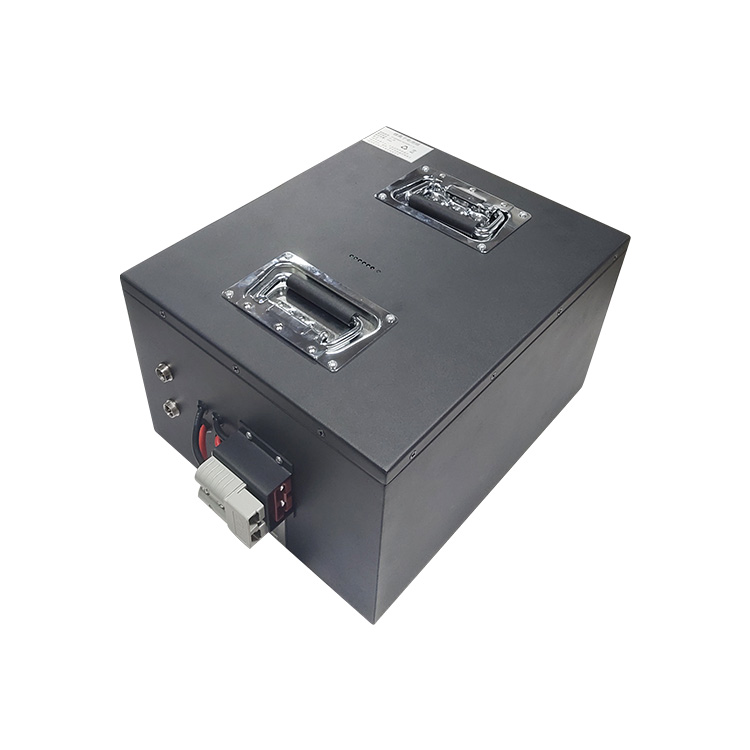


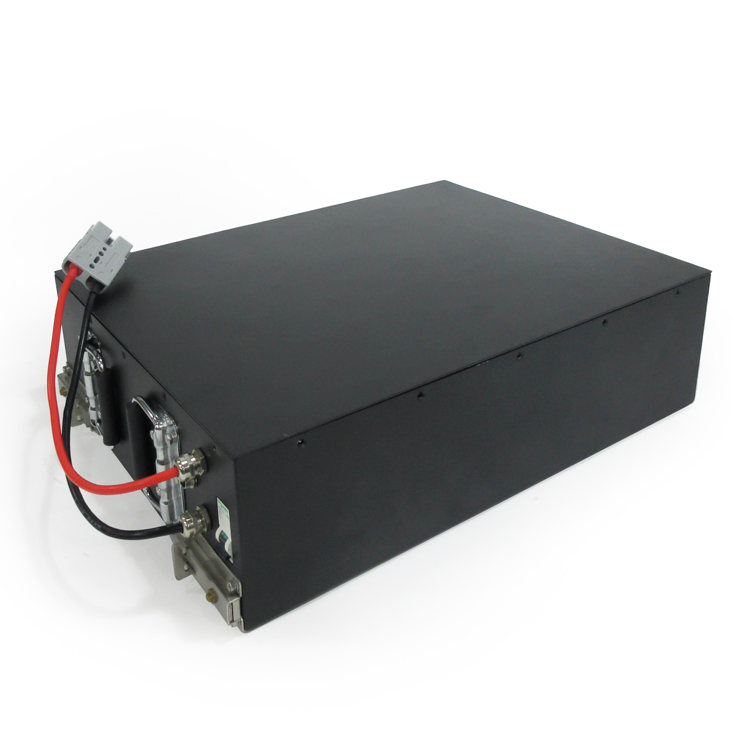
AI is rewriting the “rules of the game” for BMS: shifting from passive protection to predictive equilibrium.
The underlying logic of BMS (battery management system) is undergoing a fundamental transformation.
The working mode of traditional BMS can be summarized as "setting threshold and response afterwards": charging will be cut off when the voltage exceeds 4.2V, and protection will be triggered when the temperature exceeds 60℃. However, after the large-scale popularization of lithium iron phosphate batteries, this logic began to expose the exit limit. The voltage curve of LFP battery is extremely gentle, and the voltage change is less than 50mV in the range of SOC 30% to 80%. It is difficult to accurately estimate the remaining power by using the traditional look-up table algorithm. After the slight error continues to accumulate, it may eventually cause a loss of 5% to 10% of the available power..
AI intervention is changing this situation. Puneet Sinha, global senior director of Siemens EDA battery industry, pointed out that the industry is getting rid of rigid table-looking control, and customers want to realize online real-time impedance detection and electrochemical impedance diagnosis.. The new generation of BMS introduces electrochemical impedance spectroscopy (EIS), digital twin and embedded AI technology. By collecting multi-band impedance data from 1Hz to 1kHz, it accurately depicts the dynamic state of the battery, it is equivalent to doing ECG for each cell".
At the level of balancing strategy, the multi-cell synchronous control strategy of BMS based on AI predictive balancing is moving from academic papers to engineering implementation. This strategy takes "prediction first, synchronous control" as its core concept, and constructs a control framework that integrates LSTM prediction model and multi-objective optimization algorithm, the paradigm shift from traditional passive equilibrium to active predictive equilibrium is realized.. The third generation of active balancing products of syneng technology uses AI to empower O & M and use active balancing technology to resolve the cell consistency problem. At present, more than 50% of energy storage projects have adopted active balancing BMS..
Dongguan Juneng New Energy Technology Co., Ltd. adopts the idea of "one scenario and one strategy" in the development of BMS-the BMS of AGV Battery emphasizes the real-time communication and predictive maintenance capability with the scheduling system, the BMS and EMS of the energy storage battery participate in the overall energy scheduling, while the UAV battery focuses on lightweight and high-rate communication. The company's R & D team covers five fields: Electrochemical, electrical engineering, thermal management, structural design and software algorithm. The scale of more than 100 people enables it to deeply customize the BMS strategy for different application scenarios.
For equipment manufacturers, evaluate PACK partners it is worthThe specific question asked is: Can your BMS tell me the estimated health status of this battery after three months and the remaining life based on the current operating conditions? Vendors who can give data models usually go further than just talking about protection functions.
Contact Information:
dongguan Juneng New Energy Technology Co., Ltd.
Contact: Gao Yan 137-5142-6524
email address: susiegao@power-ing.com
address: xinghuiyuan high-tech industrial park, Dalang town, Dongguan city, Guangdong province

 Dongguan Juneng New Energy Technology Co., Ltd.
 137 5142 6524(Miss Gao)
 susiegao@power-ing.com
 Xinghuiyuan High tech Industrial Park, Dalang Town, Dongguan City, Guangdong Province

 Yue Gong Wang An Bei No. 4419002007491