



A Complete Solution of Medium-Voltage High-Energy Density Lithium Battery System Designed by UGV/UAV Application Scenarios
Unmanned aerial vehicle (UAV) and unmanned ground vehicle (UGV) are widely used in many fields such as military, industry, agriculture, security and scientific research, and power system has become one of its key technologies. Especially in terms of battery life, load capacity and system safety, higher requirements are put forward for battery performance. This paper focuses on the design scheme of medium voltage high energy density lithium battery system in UAV and unmanned vehicle application scenarios, and introduces the system architecture, key technical indicators, thermal management, safety assurance and integration scheme in detail, it aims to provide systematic solutions for related fields.
I. Application requirements and design objectives
the basic requirements of unmanned aerial vehicles and unmanned vehicles for battery systems include:
- high energy density: extend the battery life and improve the task execution efficiency.
- Medium Voltage System: take into account system security and power output requirements to meet diversified loads.
- Lightweight design: reduce the overall weight and improve mobility and load capacity.
- Reliable security performance: ensure the stability and safety of the operating environment.
- Good environmental adaptability: adapt to a variety of complex climate and terrain conditions.
II. Battery system architecture design
1. Voltage level and capacity configuration
medium voltage systems generally choose 48V, 72V or 96V voltage levels to meet different power requirements of unmanned aerial vehicles and unmanned vehicles. The battery capacity is customized according to the endurance requirements and load size. The common capacity ranges from 10AH to 200AH to ensure the task duration and emergency output.
2. Battery monomer selection
using high energy density lithium-ion battery monomer, such as ternary materials (NMC/NCA) or lithium iron phosphate (LFP) combines many advantages. Ternary material battery has high energy density and is suitable for lightweight requirements; Lithium iron phosphate battery has better stability and safety, and is suitable for specific scenarios with high safety requirements.
3. Modular design
the battery pack consists of multiple modules, each module is a series and parallel combination of several battery cells. Modular design facilitates system maintenance, replacement, and expansion while facilitating heat pipes.Manage and isolate faults.
4. Battery management system (BMS)
BMS is the key to ensure the safety and performance of batteries. Its functions include:
- real-time monitoring of voltage, current, temperature and other parameters.
- Equalize the cell voltage and prolong the battery life.
- Multiple protections such as overcharge, overdischarge, short circuit, and overtemperature.
- Communication Interface, supporting linkage with UAV/unmanned vehicle control system.
III. Thermal management system design
when unmanned aerial vehicles and unmanned vehicles perform tasks, the battery pack is often in a high load state, and heat accumulation affects performance and safety. Thermal management design is particularly important for medium-voltage lithium batteries with high energy density.
1. Active cooling scheme
adopt liquid cooling or air cooling system, combined with efficient heat dissipation structure, quickly take away the battery heat. Liquid cooling is suitable for applications with high power density and high ambient temperature. The air cooling structure is simple and light.Convenient, suitable for small unmanned aerial vehicles.
2. Passive heat dissipation design
it uses phase change materials, cooling fin and other designs to help reduce the peak temperature, especially suitable for UAV applications with strict weight restrictions.
3. Temperature sensing and early warning
equipped with multi-point temperature sensors, BMS monitors the temperature distribution in real time, alerts for exceptions in advance, and minimizes the risk of thermal runaway.
IV. Security system
the safety of batteries is especially critical when unmanned aerial vehicles and unmanned vehicles work in complex environments. Medium pressure high energy density lithium battery system security design includes:
1. Electrical safety protection
- over-current protection: prevent short circuit and large current impact.
- Overvoltage and undervoltage protection: avoid overcharging or overdischarging of battery packLong service life.
- Short circuit protection: quickly disconnect the circuit to prevent accidents from expanding.
2. Physical Security Design
- flame retardant materials and explosion-proof design are adopted to reduce fire risk.
- Mechanical seismic design ensures the shock resistance of battery pack and adapts to complex terrain.
3. Software protection policy
- BMS intelligent algorithm realizes dynamic charge and discharge management.
- Fault diagnosis and isolation functions to prevent abnormal units from affecting the entire system.
4. Environmental adaptability
- waterproof and dustproof grade design, to meet the use of complex environment in the field.
- High and low temperature resistance to ensure stable operation in extreme weather.
V. System Integration and Application examples
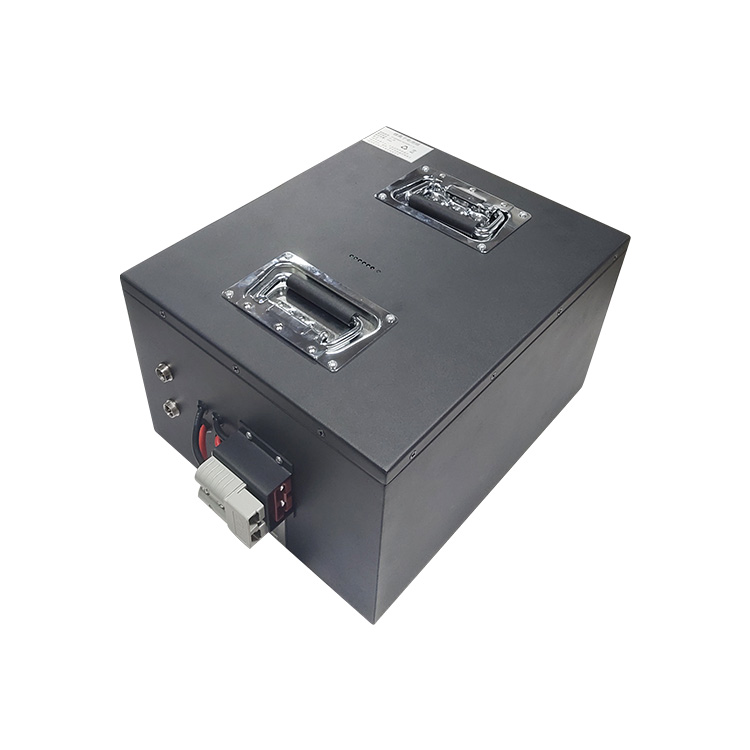
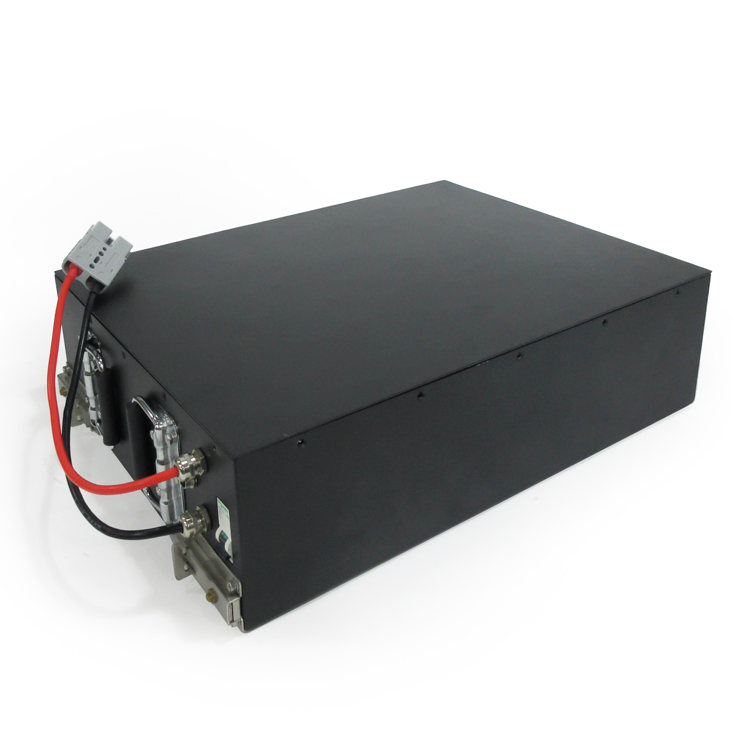
the battery system is designed according to the size, load and power requirements of UAV/unmanned vehicle, and adopts lightweight shell and compact layout. The interface design takes into account the convenience of quick disassembly and maintenance. The battery works closely with the power control system and BMS to ensure stable power output and rapid response.
2. Application scenario examples
- UAV: long-distance reconnaissance unmanned aerial vehicle is equipped with medium-voltage high-energy density lithium battery, which extends non-stop flight time to realize remote task execution.
- Unmanned ground vehicle: UGV equipment battery system for complex terrain operation supports high-power drive and various load equipment to ensure all-weather operation capability.
- Multi-task platform: combined with different types of unmanned systems, the medium voltage battery platform is unified to reduce maintenance complexity and improve system versatility.
To design a medium-voltage high-energy density lithium battery system suitable for UAV and unmanned vehicle applications, various factors such as voltage capacity configuration, battery material selection, modular design, heat management and safety guarantee should be considered comprehensively. Reasonable system architecture and perfect management scheme not only improve endurance and power output, but also ensure stable and safe operation of the system.

 Dongguan Juneng New Energy Technology Co., Ltd.
 137 5142 6524(Miss Gao)
 susiegao@power-ing.com
 Xinghuiyuan High tech Industrial Park, Dalang Town, Dongguan City, Guangdong Province

 Yue Gong Wang An Bei No. 4419002007491